Horse Shoe NC Land Buying: What To Know Before You Buy
April 2, 2026
April 2, 2026
Buying raw land can feel simple at first. You find a beautiful parcel in Horse Shoe or Etowah, picture your future home, and start planning. But with land, the real questions come before the dream: Can you build on it, reach it legally, and afford the site work it needs? If you are thinking about buying land in this part of Henderson County, this guide will help you understand the key issues to check before you close. Let’s dive in.
A vacant lot is not automatically a buildable lot. In Henderson County’s unincorporated areas, the Land Development Code applies, and zoning is one of the first things you should verify.
Your best starting point is the county’s GISWeb and zoning permit resources. These tools can help you identify zoning, overlays, and other parcel-specific issues that may affect whether you can build a home, add an accessory structure, or divide the land later.
If anything looks unclear, a zoning verification letter can provide added clarity. That step matters because Henderson County requires zoning permits early in the process, before a new address is assigned and before Environmental Health or building permits can be issued.
Even if zoning appears to allow your intended use, other rules can still limit what you can do. The county notes that the most restrictive local, state, or federal rule controls when more than one regulation applies.
That means one parcel could be affected by zoning, floodplain regulations, watershed overlays, erosion-control requirements, and road-access rules at the same time. Two lots with the same acreage can have very different development potential.
Access is one of the biggest land-buying issues in Horse Shoe and Etowah. A parcel may look easy to reach on paper, but the legal and financial details behind that access can change your plans quickly.
According to Henderson County’s road maintenance guidance, counties in North Carolina do not maintain roads. State roads are maintained by NCDOT, municipalities maintain their own streets, and private road maintenance is generally the responsibility of the property owners or others named in an agreement or deed restriction.
North Carolina law requires disclosure of whether the road serving a lot is public or private, how it will be maintained, and who is responsible for that maintenance. Henderson County outlines those requirements in its road disclosure rules.
This is more than paperwork. If a property is served by a private road, your lender may want to review maintenance agreements, and the county notes that VA loans require direct access to public streets.
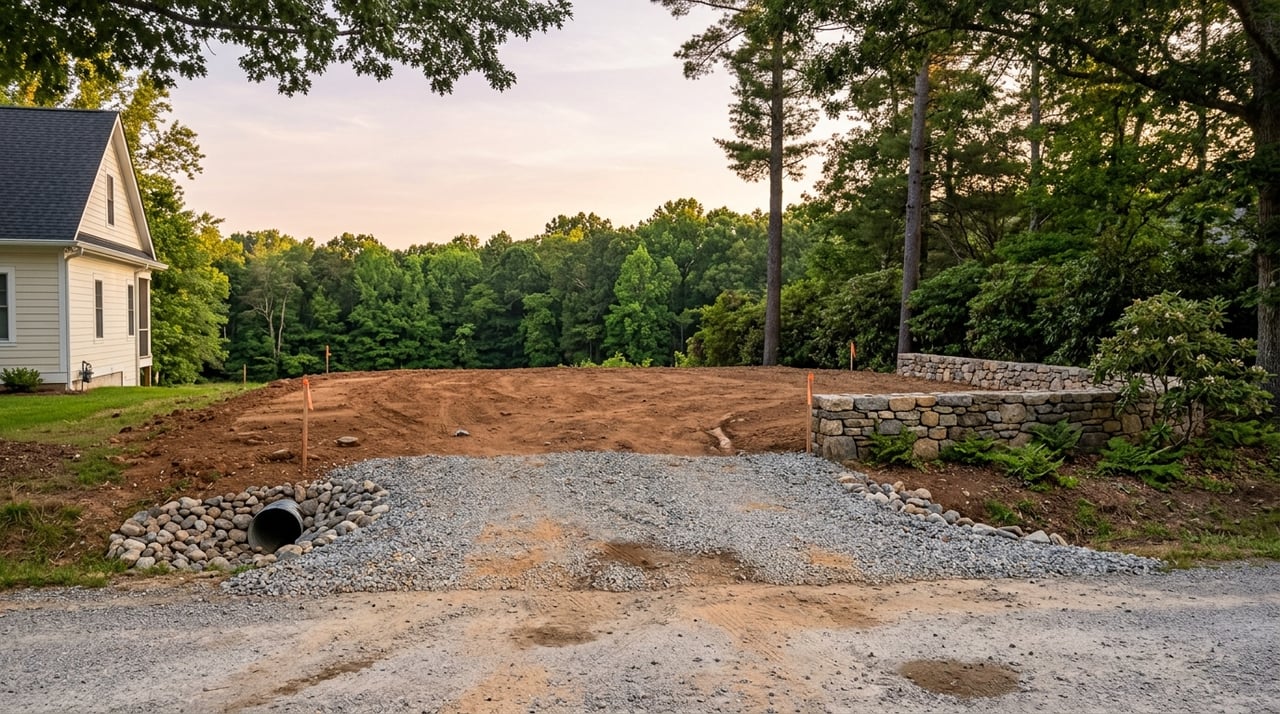
A long gravel drive, shared road, culvert, or private easement can add costs beyond the purchase price. You may need to budget for grading, drainage improvements, ongoing maintenance, and document review during financing or title work.
Henderson County’s private road standards also require unobstructed emergency access. On sloped or wooded land, bringing a road up to standard can become a major part of the project budget.
Utilities are another area where assumptions can get expensive. Just because nearby homes have service does not mean your parcel can connect easily or affordably.
In Etowah, Henderson County says it currently provides sewer service through the community, and customers still work with the City of Hendersonville for billing and service matters through the county’s Etowah sewer information. The City of Hendersonville also notes that its water and sewer system serves about 70,000 people and includes more than 580 miles of water lines, with Etowah water system improvements designed to increase pressure and fire flow.
This is a key point for acreage buyers. Henderson County states that sewer rates do not pay for system expansion, and new customers pay for expansion costs before becoming customers.
If a sewer line is technically nearby but not close enough for a simple connection, extension costs can materially change the budget. Before you buy, it is smart to confirm not only whether sewer exists, but also how far away it is and what it would take to connect.
Many land purchases in Horse Shoe and surrounding areas depend on septic and well approval. Henderson County Environmental Health handles both, and its septic program reviews topography, soil characteristics, soil wetness, depth, restrictive horizons, and available space before issuing permits.
For wells, applications can be submitted online or in person, and North Carolina requires newly constructed private wells to be tested within 30 days of completion. If you are evaluating raw land, this is one reason site conditions matter so much.
One of the easiest due-diligence steps is checking whether the property already has permit history. Henderson County offers a search tool for septic and well permits that includes historical records.
That search can help you confirm whether a parcel has prior approvals, repairs, replacements, or abandoned systems. It is not a substitute for current testing or review, but it can help you ask better questions before closing.
Mountain-area land can be beautiful, but beauty does not always equal simplicity. In Horse Shoe and Etowah, slope, drainage, and grading can have a major impact on construction cost.
Henderson County’s road construction rules say roads should generally follow the contour of the land because steep grades create operating and erosion problems. That guidance is a good reminder that steep terrain can affect much more than just your driveway layout.
If your project disturbs one acre or more in unincorporated Henderson County, the county’s soil erosion and sediment control requirements apply. Submittals must include a plan sealed by a North Carolina design professional, design calculations, and any other required approvals.
For buyers, that means larger homesites or long driveways may trigger more planning and professional review than expected. It is another reason to look beyond the list price when comparing parcels.
Flood risk is not only a concern for creekfront property. Henderson County requires a Floodplain Development Permit for new development in a Special Flood Hazard Area, and its GIS resources also point users to NCEM advisory flood data because risk can exist outside standard regulatory floodplain lines.
If the parcel is near water, low-lying, or has drainage channels crossing it, floodplain review should happen early. Waiting until after closing can create costly surprises.
The county’s water supply watershed overlay districts can limit density and built-upon area. In practical terms, that means two parcels of similar size may allow very different home footprints, driveway layouts, or future expansion plans.
This matters if you are hoping to build a larger home, include accessory improvements, or hold land for future development. Overlay rules can shape what is realistic even when the lot size seems generous.
When you buy land, the order of your research matters. Henderson County’s guidance supports a practical sequence: verify the legal envelope first, then the physical envelope, then the utility envelope.
In plain English, that means checking whether you are allowed to build before spending time pricing a well or designing a driveway. Once the legal framework is clear, you can move to site conditions and utility planning with more confidence.
Before you close on land in Horse Shoe or Etowah, consider this sequence:
Land is one of the easiest property types to underestimate. A parcel can look affordable up front, yet become far more expensive once you account for road access, grading, utility extension, septic suitability, and overlay restrictions.
That does not mean you should avoid land in Horse Shoe or Etowah. It means you should evaluate it carefully, with the right local information from the start.
If you are considering a lot or acreage in Henderson County, the Boyd Mallett Group can help you think through the questions that matter, connect the dots during your search, and help you approach the process with more clarity.
Stay up to date on the latest real estate trends.

Having the great fortune to interact with highly intelligent and successful people over the years taught me the value of hard work and the importance of continually striving to learn more and do better for yourself and your community.
Address
512 N Main St
Hendersonville NC 28792